Lifting Program Calculator [Weightlifting Calculator 2025]
To find how many calories you burn during a lifting session, multiply your weight by the MET value of the activity, then multiply by the duration in hours.
To find how many calories you burn during a lifting session, multiply your weight by the MET value of the activity, then multiply by the duration in hours.
Calories Burned = (Weight × MET value) × (Duration ÷ 60)
| Variable | Meaning |
|---|---|
| Weight | Body Weight (kg) |
| MET value | Metabolic Equivalent for lifting |
| Duration | Time spent lifting (minutes) |
You’ve got your barbell, your playlist, and a goal in mind — but how do you know what you’re actually doing for your body? The Lifting Program Calculator helps you break it all down. It shows how many calories you’re burning based on how long you lift, how hard you go, and your own body weight.
This isn’t just about guessing reps or sets. It’s about understanding your effort. Planning your next strength session? Curious about how much weight you should lift by age? Want to track your lifting progress or build a lifting plan that fits your strength level? This calculator gives you real numbers to work with.
Perfect for lifters of all kinds — from beginners checking their lifting load calculations to seasoned gym-goers tweaking their powerlifting program. Just plug in your stats, and let the calculator lift the mystery out of your workout.

To determine therapy productivity, divide the number of minutes a therapist spends in productive activities (MPMP) by the total minutes worked (MCMC) and multiply by 100. . The Therapy Productivity Calculator is an essential tool for therapists and healthcare administrators to measure efficiency in delivering care. It helps track how much of a therapist’s working…
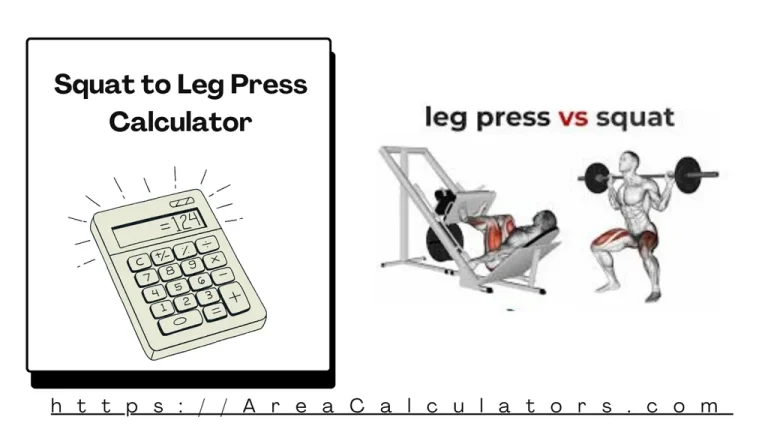
Multiply your squat weight by 2.5 to estimate your leg press weight. The Squat to Leg Press Calculator estimates the equivalent leg press weight based on your squat performance. The conversion accounts for the mechanical advantages of the leg press machine compared to free-weight squats. Formula: LP = S ∗ 2.5 Variable Description Unit LP…

To convert degrees Plato (°P) to specific gravity (SG), use a formula that relates °P to SG with a correction factor for accuracy. The Plato to Specific Gravity Calculator simplifies converting degrees Plato, a common measure of wort or must concentration in brewing, into specific gravity. This tool is essential for brewers and winemakers to…
To find the Positive Likelihood Ratio, divide sensitivity by (100 minus specificity). For the Negative Likelihood Ratio, divide (100 minus sensitivity) by specificity. Formula: Positive LR = SE ÷ (100 – SP)Negative LR = (100 – SE) ÷ SP Table of Variables Variable Meaning SE Sensitivity (%) SP Specificity (%) LR Likelihood Ratio What is…