Attributable Risk Calculator [Risk Factor Due To Disease Exposure]
To find attributable risk, subtract the incidence rate in the unexposed group from the incidence rate in the exposed group.
AR = Ie – Iu
| Variable | Meaning |
|---|---|
| AR | Attributable Risk |
| Ie | Incidence in Exposed Group |
| Iu | Incidence in Unexposed Group |
Imagine two groups of people—one that smokes, and one that doesn’t. Over time, some in each group develop lung disease. The Attributable Risk Calculator helps you figure out how much of the disease risk is due to smoking itself. It shows the extra risk caused by the exposure.
This tool is commonly used in epidemiology, health research, and risk analysis. If you’re studying how one factor (like smoking, pollution, or diet) impacts a specific outcome, this calculator gives you the risk difference between the exposed and unexposed groups. You’ll also find more advanced versions, like the population attributable risk calculator, or tools for SPSS and Excel users.
It works well with related terms like attributable risk percentage, relative risk calculator, and how to calculate risk exposure value. If you’re comparing attributable risk vs. relative risk, or trying to understand the impact of a health behavior, this calculator gives you a clear, simple number that makes risk easier to measure—and to manage.
Subtract 1 from the human age, multiply by 5, and add 100 to find the equivalent elf age. The Human Age to Elf Age Calculator helps convert a human’s age into the corresponding elf age, reflecting the long lifespan of elves in fantasy settings like Dungeons & Dragons. This tool is particularly useful for role-playing…
Multiply the cycling miles by 5,280, then divide by your average stride length to estimate the equivalent steps. The Cycling Miles to Steps Calculator is a handy tool for converting miles cycled into step equivalents. This conversion is particularly useful for fitness tracking, where steps are often used as a standard unit of physical activity….
To find the NPV, divide the true negative rate by the sum of the true negative rate and the false negative rate. Formula: NPV = TNR ÷ (TNR + FNR) Table of Variables Variable Meaning NPV Negative Predictive Value TNR True Negative Rate FNR False Negative Rate What is a Negative Predictive Value Calculator |…
To calculate how far you’ve run, multiply your pace by the total time you spent running. Formula: D = P × T Table of Variables Variable Meaning D Distance (in km or miles) P Pace (speed per hour) T Time (in hours) What is a Run Distance Calculator: Finding Run Distance Made Easy Let’s say…
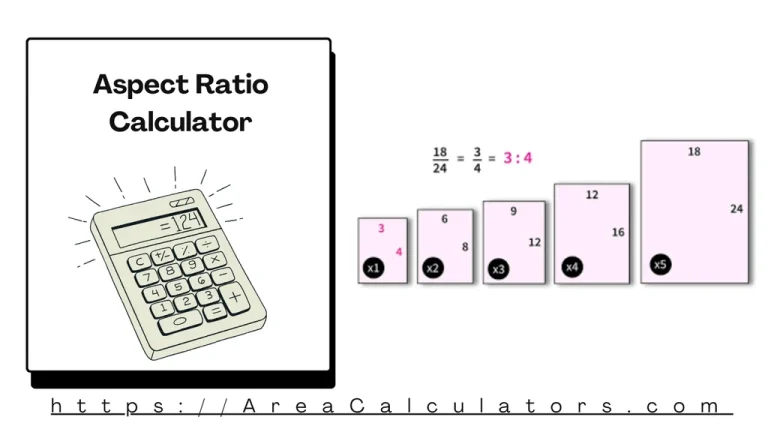
To calculate an aspect ratio, divide the width and height of an image or screen by their greatest common divisor (GCD), yielding the simplest ratio form. The Aspect Ratio Calculator determines the proportional relationship between the width and height of an image, screen, or object. Aspect ratios are crucial in photography, videography, and display design,…
To find R0, multiply the transmission rate (t), contact rate (c), and duration of infectiousness (d). Formula: R0 = t × c × d Table of Variables Variable Meaning R0 Basic Reproduction Number t Transmission Rate c Contact Rate d Duration of Infectiousness What is an R0 Calculator? Find the Reproduction Number Or Virus Spread…