Attack Rate Calculator [Infection, Transmission & Prevention]
To find the attack rate, divide the number of new cases by the number of people exposed.
To find the attack rate, divide the number of new cases by the number of people exposed.
A = NC ÷ PE
| Variable | Meaning |
|---|---|
| A | Attack Rate |
| NC | Number of New Cases |
| PE | Population Exposed |
Imagine a group of people go to a picnic and eat the same dish. The next day, several get sick. How do we measure the spread? That’s where the Attack Rate Calculator comes in. It tells you what portion of the exposed group ended up affected. Simple division, but powerful insight.
This tool is widely used in epidemiology, public health, and outbreak tracking. You’ll also hear about primary attack rate, secondary attack rate, or food-specific attack rate depending on who got sick and how. Need to calculate overall attack rate or understand the difference between attack rate and incidence rate? This calculator clears up the confusion.
You can use it for disease tracking, health studies, or even real-world cases like a virus spreading through a school. It works great with terms like attack rate formula, attack rate calculation example, and attack rate vs incidence rate. So next time you hear about an outbreak, you’ll know exactly how experts figure out how fast it’s spreading.

To calculate EFG %, apply the formula using made and attempted field goals including three-pointers for accuracy. Formula: EFG = (2PFG + 1.5 × 3PFG) / FGA × 100 Table of Variables: Variable Meaning 2PFG Two-point field goals made 3PFG Three-point field goals made FGA Total field goal attempts What is Effective Field Goal Percentage…
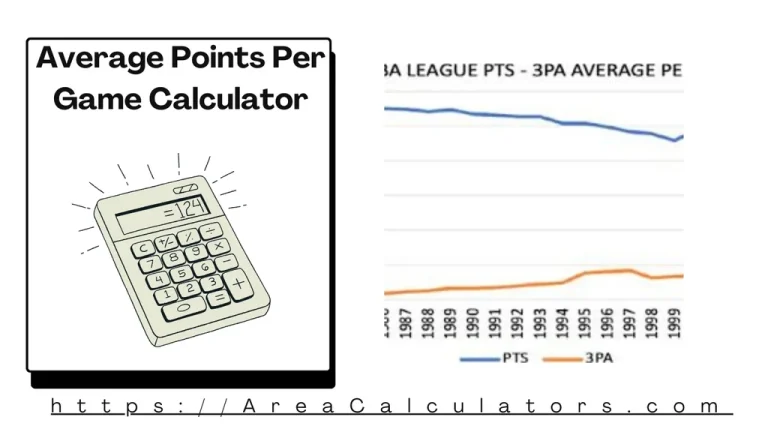
Divide the total points scored by the number of games played to find the average points per game. The Average Points Per Game Calculator is a useful tool for athletes, coaches, and statisticians to measure performance by calculating the average points scored across multiple games. This metric, commonly used in sports like basketball, soccer, and…
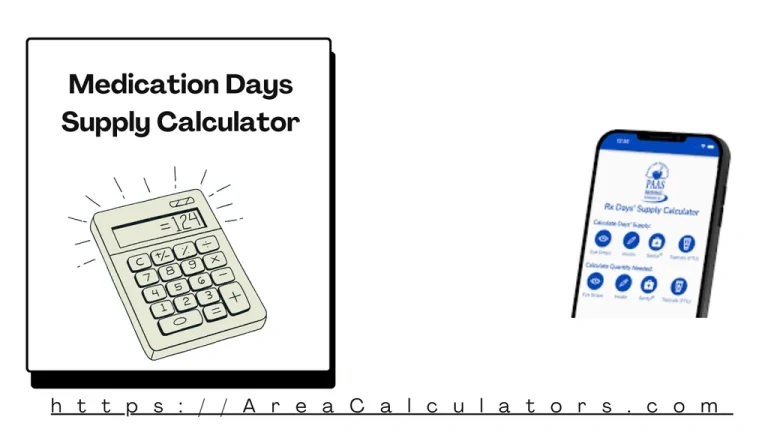
Divide the total quantity of medication by the daily dosage frequency to determine the number of days it will last. The Medication Days Supply Calculator is a useful tool for pharmacists, healthcare providers, and patients to determine how long a prescribed medication will last based on its dosage instructions. It calculates the days of supply…
For females, add the triceps, thigh, and suprailiac skinfolds, plug them into the formula with your age, and get your body fat estimate. For males, use thigh, chest, and abdomen measurements instead. Formula: Females:D = 1.09949 – (0.00099 × (Triceps + Thigh + Suprailiac)) + (0.0000023 × (Triceps + Thigh + Suprailiac)²) – (0.0001392 ×…

Divide the interocular distance (ID) by the distance from the lip to the lower eyelid (DL) to find the midface ratio. The Midface Ratio Calculator is a tool that determines the proportional relationship between key facial measurements, specifically the interocular distance and the distance from the lower eyelid to the lip. This ratio is often…