Custody Percentage Calculator
To determine custody percentages, divide the days one parent has custody by the total custody days, then multiply by 100.
To determine custody percentages, divide the days one parent has custody by the total custody days, then multiply by 100.
A custody percentage calculator is a useful tool for parents and legal professionals to determine parenting time allocation. It calculates the percentage of time each parent spends with their child, aiding in fair arrangements and supporting child support calculations.
| Variable | Meaning |
|---|---|
| Custody percentage for Parent 1 | |
| Custody days Parent 1 | |
| Custody days Parent 2 |
Example 1:
Parent 1 has custody for 200 days in a year, while Parent 2 has custody for 165 days.
| Step | Calculation | Result |
|---|---|---|
| Add custody days | 365 days | |
| Divide Parent 1 days | | 0.5479 |
| Multiply by 100 | 54.79% |
Example 2:
Parent 1 has custody for 150 days, and Parent 2 has custody for 215 days.
| Step | Calculation | Result |
|---|---|---|
| Add custody days | 365 days | |
| Divide Parent 1 days | | 0.41096 |
| Multiply by 100 | 41.10% |
The Custody Percentage Calculator is a user-friendly tool which is designed to calculate the percentage of parenting time each parent has with their child. This calculation is vital in family law cases, particularly for determining custody arrangements and child support.
By inputting specific details such as the number of overnights and shared hours, this tool provides an accurate breakdown of time percentages.
Simply enter the relevant information, such as the custody schedule (e.g., weekly, bi-weekly) and the number of overnights each parent has. The calculator will compute the exact custody percentage for both parents, giving clarity to custody agreements and aiding in child support calculations.
This tool is especially useful for parents navigating custody disputes or creating shared parenting plans. It simplifies complex calculations, ensuring transparency and fairness. Additionally, it provides helpful insights for legal professionals involved in family law.
To sum up, the Custody Percentage Calculator is a reliable and practical resource for determining parenting time percentages. It offers clarity and precision, making it an invaluable tool for families and legal experts alike.

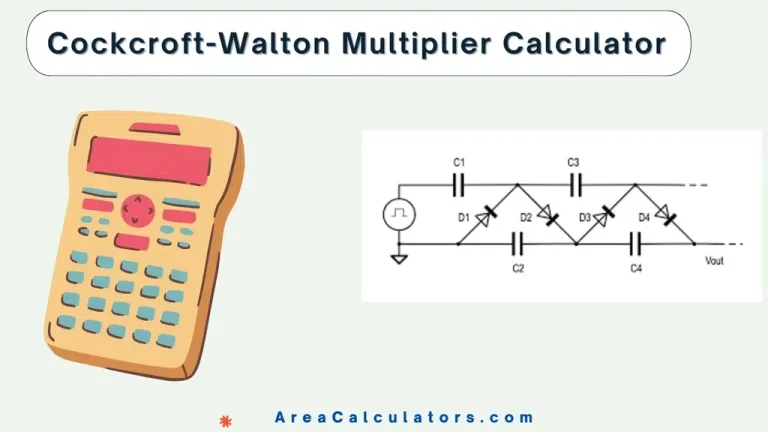
9 / 100 SEO Score Enter the values in required fields of Cockroft – Walton Multiplier Calculator to use basic and advanced calculator. The Cockcroft-Walton Multiplier Calculator is used to compute the output voltage of a Cockcroft-Walton voltage multiplier, a type of circuit designed to multiply AC input voltage into a higher DC output voltage….
To determine the spacing between pictures on a wall, subtract the total width of the pictures and their frames from the wall width, then divide the remaining space by the number of gaps. The Picture Spacing Calculator is a valuable tool for anyone looking to hang multiple pictures evenly on a wall. Whether it’s a…
To determine a date 120 days from today, add 120 days to the current date while accounting for weekends or working days if needed. 120 Days From Now Calculator Basic Calculator Advanced Calculator Given Date Date 120 Days From Given Date Given Date Days to Add Resulting Date Calculate Reset The 120 Days From Today…

To calculate gear inches, multiply the tire’s rolling diameter by the result of dividing the chainring teeth by the rear cog teeth. The Gear Inch Calculator is a tool used by cyclists to evaluate and compare gearing setups for different riding conditions. It calculates the effective wheel size, which indicates how far a bicycle travels…
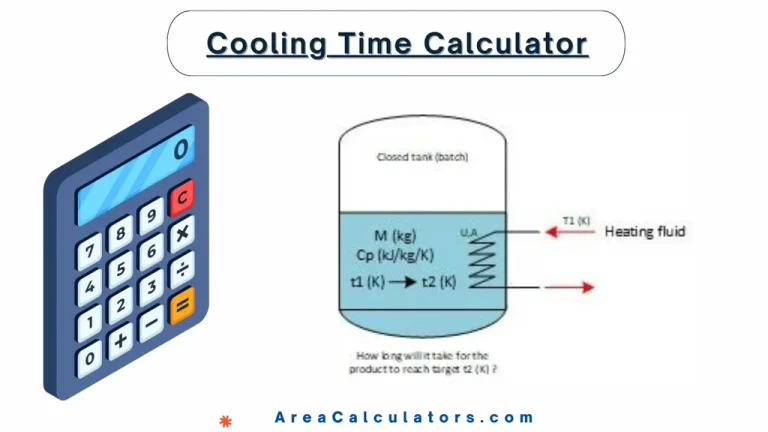
7 / 100 SEO Score To calculate the cooling time, multiply the mass of the object (m) by its specific heat capacity (c) and the difference between the initial and final temperatures (Ti − Tf). Then, divide this product by the product of the heat transfer coefficient (h) and the surface area (A) through which…
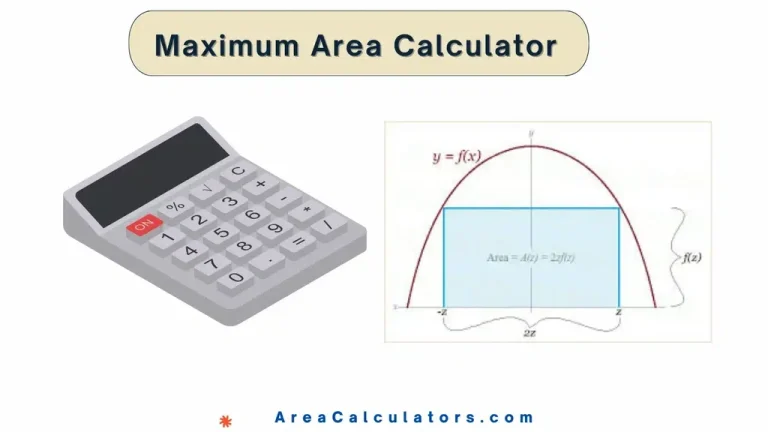
9 / 100 SEO Score Enter the required values to get accurate and quick calculations ! The Maximum Area Calculator lets you to find the largest area enclosed by various shapes. Whether it’s a square, rectangle, or triangle, the knowledge of how to maximize area involves applying geometry formulas and optimization methods. With right tools…