Anaerobic Heart Rate Calculator [Anaerobic Threshold Heart Rate]
To find your anaerobic heart rate, subtract your age from 220, then multiply the result by 0.85.
To find your anaerobic heart rate, subtract your age from 220, then multiply the result by 0.85.
AHR = (220 – A) × 0.85
| Variable | Meaning |
|---|---|
| AHR | Anaerobic Heart Rate |
| A | Age (in years) |
Imagine you’re pushing hard in a workout—sprinting, climbing, or lifting. Your breathing speeds up, your muscles burn, and your heart pounds. That’s your body working in the anaerobic zone—and the Anaerobic Heart Rate Calculator shows you exactly when that happens. It takes your age, does the math, and gives you the heart rate where this intense effort kicks in.
Athletes use it to train smarter. If you’re doing anaerobic exercise, like HIIT or heavy resistance work, this calculator helps you hit that sweet spot for building strength, speed, and endurance. Wondering what zone is 176 bpm, or how to find your anaerobic heart rate by age and gender? This tool answers it in seconds.
It pairs well with a heart rate zone calculator, aerobic and anaerobic heart rate calculator, or even a target heart rate calculator for a complete fitness plan. So next time you’re asking “What is my anaerobic heart rate?” or trying to calculate anaerobic threshold, this calculator keeps things simple—and your training on track.

For females, add the triceps, thigh, and suprailiac skinfolds, plug them into the formula with your age, and get your body fat estimate. For males, use thigh, chest, and abdomen measurements instead. Formula: Females:D = 1.09949 – (0.00099 × (Triceps + Thigh + Suprailiac)) + (0.0000023 × (Triceps + Thigh + Suprailiac)²) – (0.0001392 ×…
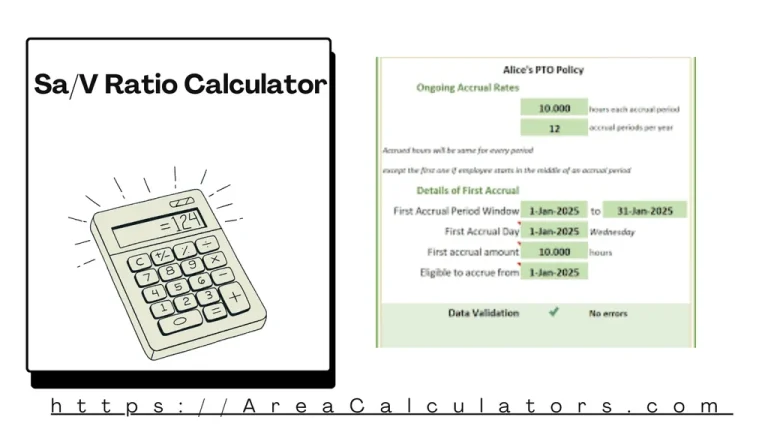
To compute prorated PTO, divide the annual PTO by the total working days in a year and multiply by the remaining working days in the year. The Prorated PTO Calculator is a practical tool for measuring the amount of paid time off (PTO) an employee is entitled to when they join or leave an organization…
To determine therapy productivity, divide the number of minutes a therapist spends in productive activities (MPMP) by the total minutes worked (MCMC) and multiply by 100. . The Therapy Productivity Calculator is an essential tool for therapists and healthcare administrators to measure efficiency in delivering care. It helps track how much of a therapist’s working…
To find how many calories you burn rucking, multiply your BMR by the MET value for rucking, then divide by 24. Formula: C = BMR × MET ÷ 24 Table of Variables Variable Meaning C Calories Burned BMR Basal Metabolic Rate MET Metabolic Equivalent for Rucking What is a Rucking Calories Calculator | Measure The…