To calculate the weight gain from drinking beer, multiply the amount of beer consumed by the caloric content per liter, and then divide the result by the number of calories needed to gain a pound (3500 kcal) or a kilogram (7700 kcal). This will give you an estimate of how much weight you might gain from the beer.
The Beer Weight Gain Calculator helps you calculate how much weight you may gain based on your beer consumption. By entering the amount of beer consumed and its caloric content, this tool provides an estimate of potential weight gain. It’s perfect for those looking to monitor their caloric intake while enjoying their favorite drink.
Formula:
Where:
WG = Weight Gain (in kilograms or pounds)
BC = Beer Consumption (in liters or milliliters)
CC = Caloric Content of the beer (in kcal per liter)
CP = Calories Per Pound or Kilogram (3500 kcal/lb or 7700 kcal/kg)
Variable
Description
WG
Weight Gain (in kilograms or pounds)
BC
Beer Consumption (amount of beer consumed in liters or milliliters)
CC
Caloric Content of the beer (kcal per liter)
CP
Calories per pound or kilogram (3500 kcal/lb or 7700 kcal/kg)
Example Calculation:
Let’s assume the Beer Consumption (BC) is 2 liters, and the Caloric Content (CC) of the beer is 500 kcal per liter. The calories per pound (CP) is 3500 kcal/lb.
So, the weight gain from consuming 2 liters of beer is approximately 0.29 pounds.
Step-by-Step Calculation:
Step
Calculation
Result
1
Multiply Beer Consumption by Caloric Content
2×500=1000 kcal
2
Divide the result by the Calories Per Pound
35001000=0.2857 pounds
What is Beer Weight Gain Calculator ?
A Beer Weight Gain Calculator helps estimate the potential weight gain based on beer consumption and the number of calories in the beer. The formula to calculate weight gain from beer intake is based on the caloric surplus:
Where:
Total Beer Calories is the number of calories consumed from beer (calculated by multiplying the number of beers by the calories per beer),
Maintenance Calories is the number of calories your body needs to maintain your current weight,
3500 calories is equivalent to approximately 1 pound of body weight.
For example, if you consume multiple 500 ml beers, and each beer contains around 200-250 calories, the total caloric intake from beer can be calculated to determine potential weight gain. Tools like a beer weight gain calculator app can automate these calculations based on the number of beers, their calorie content, and your daily caloric needs.
Beer, like other alcoholic drinks, can contribute to weight gain due to the high number of empty calories. Additionally, factors like metabolism, alcohol weight gain and bloating, and overall diet play a role in how quickly weight is gained. Monitoring both beer intake and calorie consumption using a calorie calculator can help prevent unnecessary weight gain.
Understanding calories in alcohol, such as in wine, whiskey, or beer, is essential to control daily intake, especially if you’re working on a weight management plan. For fitness enthusiasts, tools like a weight gain calculator bodybuilding or calorie calculator exercise can help balance beer consumption with physical activity to mitigate weight gain
To determine the date 200 days from today, add 200 days to the current date. This method is useful for future planning, whether for setting goals, project timelines, or tracking deadlines. 200 Days From Today Calculator Today’s Date Date 200 Days From Today Calculate Reset The 200 Days From Today Calculator provides a simple way…
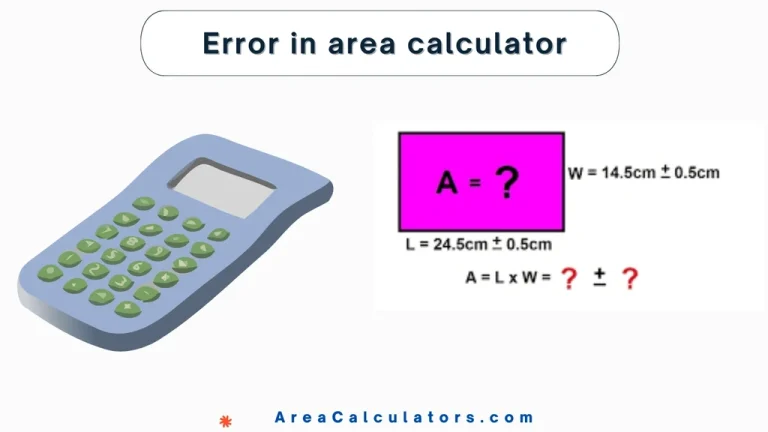
10 / 100 SEO Score To calculate the error in area, subtract the measured area (MA) from the true area (TA), divide the difference by the true area, and multiply by 100. This gives the percentage error in area. To understand errors in area is crucial, especially in scientific fields like physics and numerical analysis….
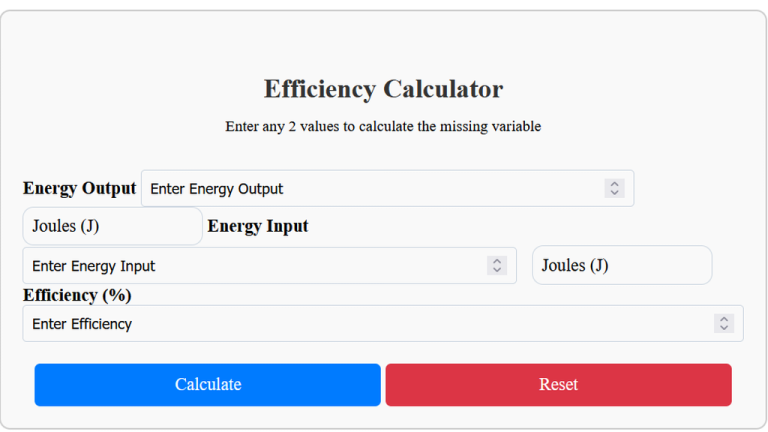
The Efficiency Calculator can smoothly assess the performance of machines, systems, and processes by calculating the ratio of useful output to energy input. This measurement is necessary in a wide range of fields, including physics, engineering, and business, helping identify areas for improvement and optimize energy use. By conveniently entering the output and input values,…
To determine the date 79 days from today, add 79 days to the current date while accounting for calendar rules like leap years and month lengths. 79 Days From Today Calculator 79 Days From Today Calculator Today’s Date: Date 79 Days From Today: Calculate Reset The 79 Days From Today Calculator provides a quick and…
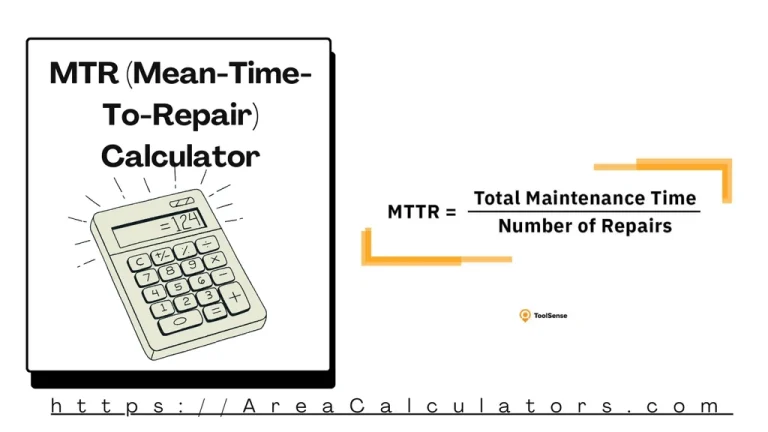
To determine the Mean-Time-To-Repair (MTR), divide the total downtime (D) by the number of repair events (S). This calculation provides an average time required to repair a system or component. The MTR (Mean-Time-To-Repair) Calculator is an essential tool for maintenance and reliability professionals. It measures the average time taken to restore a system to operational…
To calculate 135 days from today, simply add 135 days to the current date. 135 Days From Today Calculator Today’s Date Date 135 Days From Today Calculate Reset The 135 Days From Today Calculator facilitates you to foretell what date falls exactly 135 days from today. This is useful for planning future events, calculating deadlines,…