To convert from base-10 to base-9, divide the number by 9 and keep track of the remainders. For instance, converting 81 results in 100 in base-9. Use the Base 9 Calculator for quick results.
The Base 9 Calculator converts numbers between base-9 and base-10, providing easy conversions for complex base calculations. It is useful for mathematical computations involving different number systems.
Formula:
Where:
Variable
Meaning
d
Each digit in the number
n
Position of the digit (starting from 0 at right)
9
The base (9 in this case)
Example Calculation:
To convert a base-10 number to base-9, let’s take the example of converting 81 from base-10 to base-9.
Divide 81 by 9:
81÷9=9 remainder 0
Divide the result (9) by 9:
9÷9=1 remainder 0
Divide the result (1) by 9:
1÷9=0 remainder 1
So, 81 in base-9 is 100.
What is Base 9 Calculator ?
A Base 9 calculator is used to perform arithmetic operations, conversions, and calculations using the base-9 numbering system. In base 9, digits range from 0 to 8, and numbers are expressed using powers of 9.
For example, to convert from base 10 to base 9, you repeatedly divide the base 10 number by 9 and keep track of the remainders. Using a base 9 calculator with steps simplifies this process, making it easy to convert between number systems.
Other tools, like a base converter, allow for easy conversion between different numbering systems (such as base 9 to base 5 or base 10).
For multiplication or more complex operations, a base 9 calculator multiplication can help perform these tasks while keeping the numbers in base 9. This is useful in mathematics and certain computational applications where different base systems are employee
To calculate Mean Time Between Failures (MTBF), divide the total operational time (TOT) of a system by the total number of failures (TF). This provides a clear measure of reliability, helping organizations predict system performance and maintenance needs. The Mean Time Between Failures (MTBF) Calculator is an essential tool for assessing system reliability. It calculates…
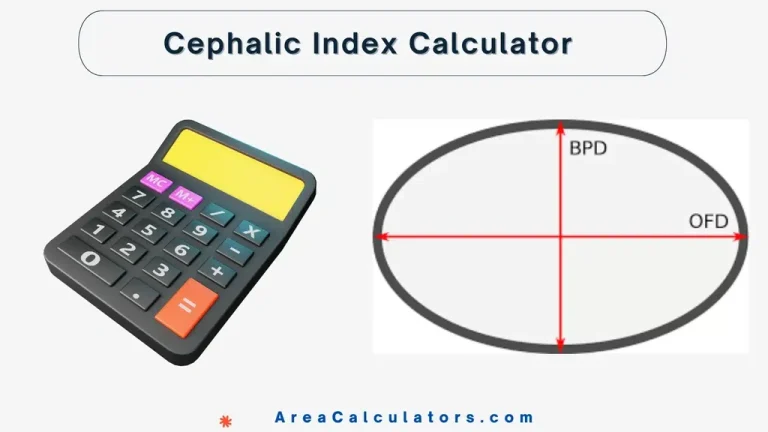
9 / 100 SEO Score To calculate the cephalic index, divide the width of the head by its length, then multiply the result by 100. This gives you the cephalic index as a percentage. The Cephalic Index Calculator is a tool used to determine the cephalic index, which is a measure of the skull’s shape….
To calculate the E-value, multiply mm by nn, then multiply the result by 22 raised to the power of −S-S. This formula is widely used in statistics, especially for assessing the strength of unmeasured confounding and in exponential functions. The E Value Calculator is a powerful tool designed to compute exponential values based on input…
To calculate 10 business days from today, you need to add 10 business days to the current date, excluding weekends and public holidays. 10 Business Days From Today Calculator Today’s Date Date 10 Business Days From Today Calculate Reset The 10 Business Days From Today Calculator is a useful tool for predicting a future date…
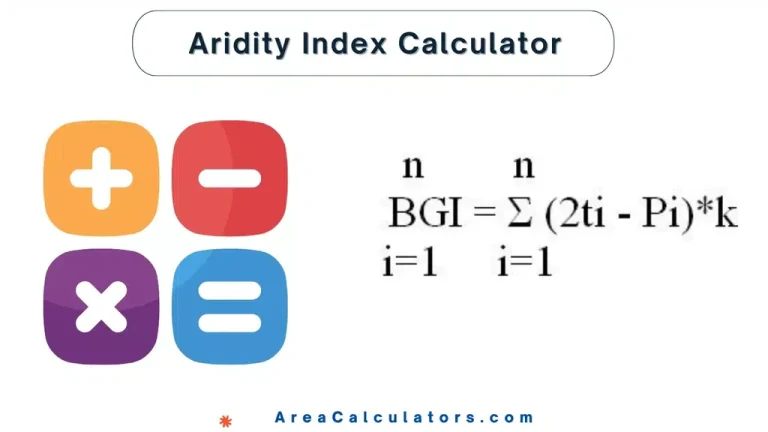
10 / 100 SEO Score Enter the values of Annual Precipitation, Potential Evapotranspiration, monthly data to calculate with our basic and advanced Aridity Index Calculator ! Welcome to the Aridity Index Calculator! Have you ever wondered how to measure the dryness of a climate? The Aridity Index provides a simple way to assess the relationship…
10 / 100 SEO Score To calculate bonus depreciation, multiply the cost of the asset by the depreciation rate and time, then divide by 100. The Bonus Depreciation Calculator helps you determine the amount of bonus depreciation you can claim on qualifying assets. Bonus depreciation allows businesses to deduct a large portion of the cost…